In Filipino culture, turning 18 is more than just a birthday. It is a milestone marked by elegance, tradition, and deep family significance. Known as the Philippine Debut, this celebration honours; a young woman’s transition from childhood into adulthood through a lavish and meaningful event shared with family, friends, and the wider community.
What is a Philippine Debut?
A Philippine Debut is the coming-of-age celebration for Filipino girls when they turn 18. Often compared to a Western debutante ball or quinceañera, the Debut is uniquely Filipino in both symbolism and spirit. It is typically held as a formal evening event, complete with a grand venue, elaborate décor, fine dining, and a beautifully choreographed program.
At the heart of the celebration is the debutante herself, dressed in an exquisite gown, symbolising maturity, grace, and confidence as she steps into a new chapter of her life.
Key Traditions of the Debut
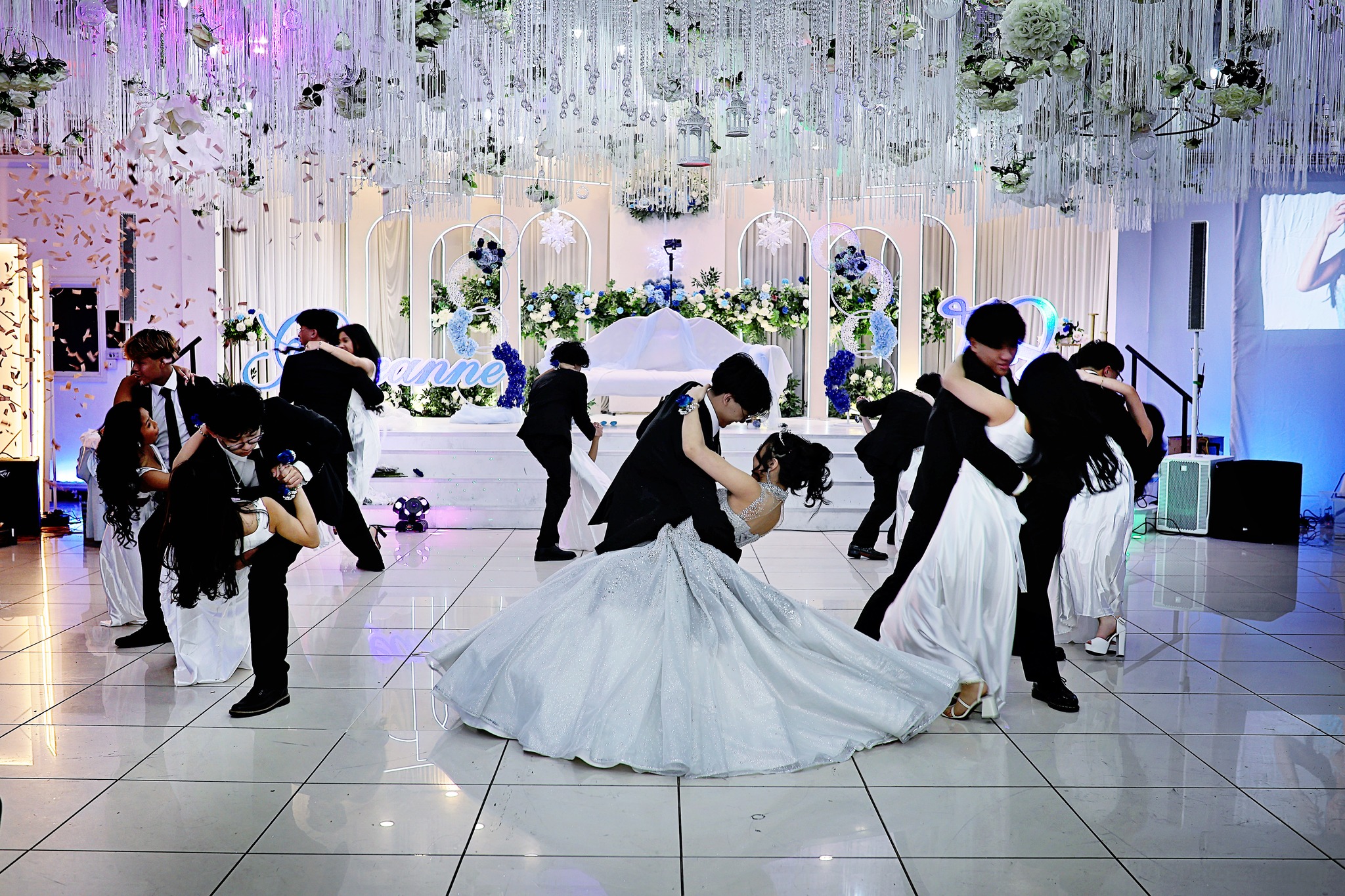
One of the most anticipated parts of a Philippine Debut is the cotillion, a formal dance performed by the debutante with her chosen entourage. Traditionally, this includes:
- 18 Roses – Eighteen male figures (family members or close friends) who dance with the debutante, each rose representing love, respect, and protection.
- 18 Candles – Eighteen female figures who offer short messages, advice, or wishes, symbolizing guidance and friendship.
- 18 Treasures / Gifts / Shots – Modern adaptations that reflect the debutante’s personality, blending tradition with creativity.
These rituals highlight the strong Filipino values of family unity, respect for elders, and the importance of community support.
A Brief History of the Philippine Debut
The roots of the Philippine Debut can be traced back to Spanish colonial influence, when formal social introductions were common among elite families. During that time, young women were formally “introduced” to society upon reaching maturity.
Over generations, Filipinos adapted this custom into something warmer and more family-centered. While the celebration retained its elegance, it became less about social status and more about honoring family bonds, cultural identity, and personal growth. Today, the Debut is celebrated by Filipinos from all walks of life, each adding their own personal touch.
Celebrating Beyond the Philippines
As Filipinos migrated across the world, they brought their traditions with them. Today, Philippine Debuts are widely celebrated outside the Philippines. In countries such as the United Kingdom, the United States, Canada, Australia, and across the Middle East, there is a strong Filipino diaspora.
For many families abroad, the Debut is more than a birthday celebration. It is a powerful way to preserve cultural identity, especially for young Filipinas growing up in multicultural societies. Through traditional music, Filipino food, customs, and values, the Debut becomes a bridge between generations and homelands.
Community halls, hotels, and cultural centers abroad often transform into stunning venues where Filipino traditions shine, proving that distance from the Philippines does not diminish the richness of its culture.
More Than a Party
While the Philippine Debut is undeniably lavish and festive, its true meaning goes far deeper. It is a celebration of womanhood, a tribute to parents, a symbol of respect for family, and a harbinger of hope for the future. It reminds the debutante that she does not step into adulthood alone, a circle of love, tradition, and community supports her.
Whether celebrated in Manila, Leeds, London, New York, or Sydney, the Philippine Debut remains a beautiful expression of Filipino heritage, one that continues to evolve while staying rooted in values that matter most.